The Crypto Voter: A New Political Demographic in 2024

As America approaches the 2024 presidential election, a new and potentially decisive voting bloc has emerged from the intersection of technology, finance, and politics. The “crypto voter,” a demographic that barely existed a decade ago, now represents a confluence of traditional finance professionals, tech-savvy millennials, and mainstream investors brought together by the mainstream adoption of digital assets.
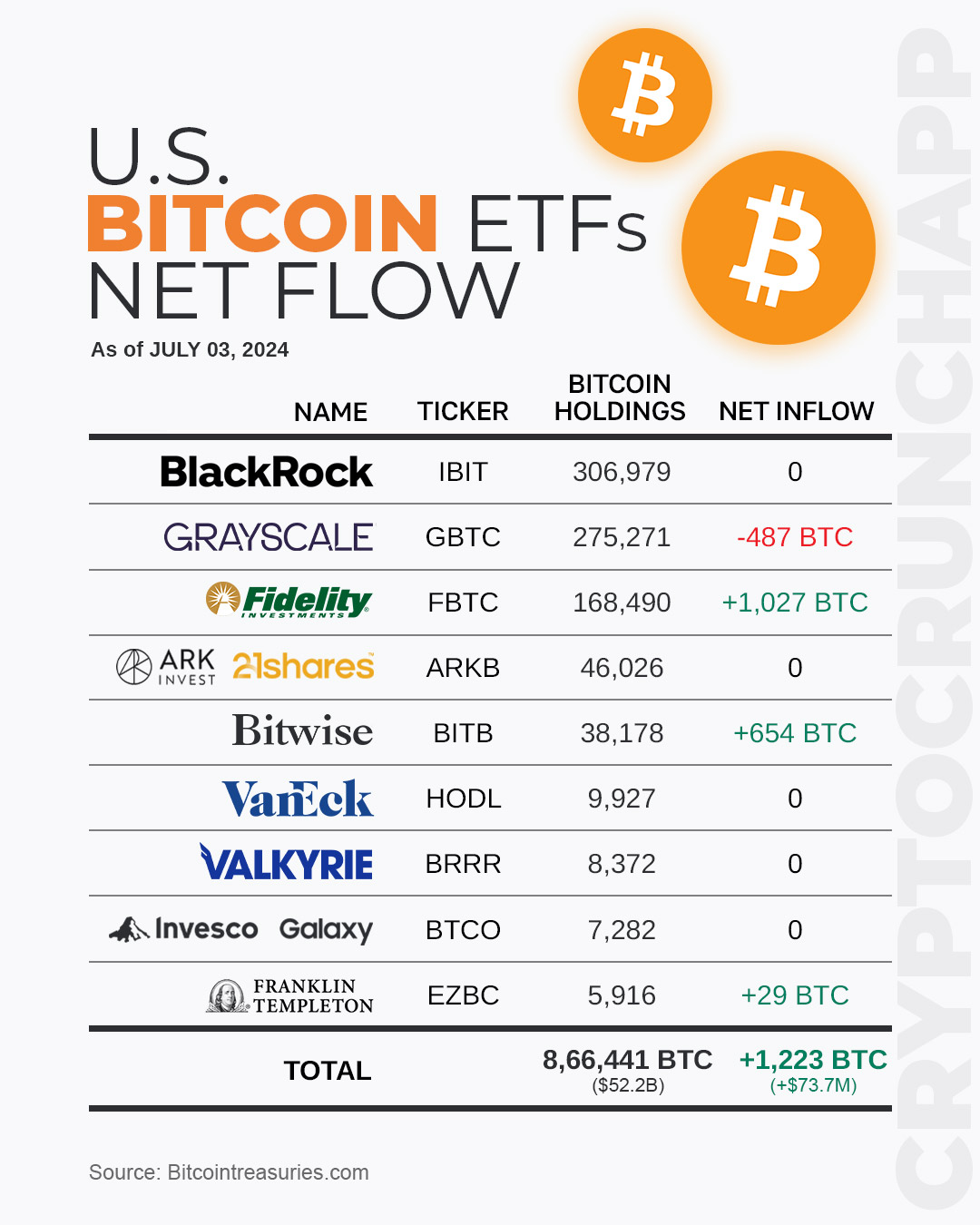
This transformation hasn’t happened in isolation. The approval of Bitcoin and Ethereum ETFs, growing institutional adoption, and increasing regulatory attention have pushed cryptocurrency from the fringes of finance into American retirement accounts and investment portfolios. As digital assets become increasingly woven into the financial fabric of American life, their influence on political preferences and voting patterns will grow proportionally.
This analysis examines how this emerging demographic could influence the 2024 election cycle, exploring historical parallels, demographic trends, and the crucial role of recent market developments in shaping voter behavior. It’s meant to be information-heavy, so I have used bullet points liberally while adding citations for you to DYOR.
Historical Context & Technological Precedent
The Clinton Era Internet
The intersection of technology and American politics isn’t new. In 1992, when Bill Clinton and Al Gore first championed the “Information Superhighway,” they recognized an emerging technological revolution that would fundamentally reshape the American economy and electorate. Their campaign was the first to effectively harness the potential of digital communications, setting up bulletin boards and email systems that seem primitive today but represented a radical shift in political engagement.
Clinton’s administration went on to implement the Framework for Global Electronic Commerce (1997), which established key principles still relevant today:
Private sector leadership
Minimal government intervention
Recognition of the Internet’s unique qualities
Facilitation of global commerce [1]
These principles mirror today’s crypto policy debates remarkably closely. Just as Clinton’s administration had to balance innovation with regulation, today’s politicians face similar challenges with blockchain technology. *Many would argue that the current administration has a deferral-first and law-fair mentality.
The key difference?
The internet’s impact was primarily cultural and communicative first and economic second. Cryptocurrency reverses this pattern – the primary impact is economic, with social and cultural implications secondary.
Evolution of Crypto Demographics
Financial Sector Overlap
The crypto voter base represents a convergence of two traditionally distinct groups: technology early adopters and financial services professionals. This convergence in today’s society and culture creates a uniquely powerful demographic bridging the traditional finance and digital innovation gap.
The financial services sector, employing approximately 8.5 million Americans [2], provides crucial context for understanding crypto’s political implications:
Professional Demographics [3]:
73% hold college degrees (compared to 55% among crypto holders)
Median age of 41 (overlapping with prime crypto adoption ages)
82% concentration in urban/suburban areas
Estimated 1.88 million professionals actively engaged in both traditional finance and crypto markets [14]
Geographic Clustering Key financial centers showing strong crypto adoption [4]:
Miami: 215,000 finance professionals, 120+ crypto companies
Atlanta: 180,000 finance professionals, 85+ crypto companies
Phoenix: 140,000 finance professionals, 65+ crypto companies
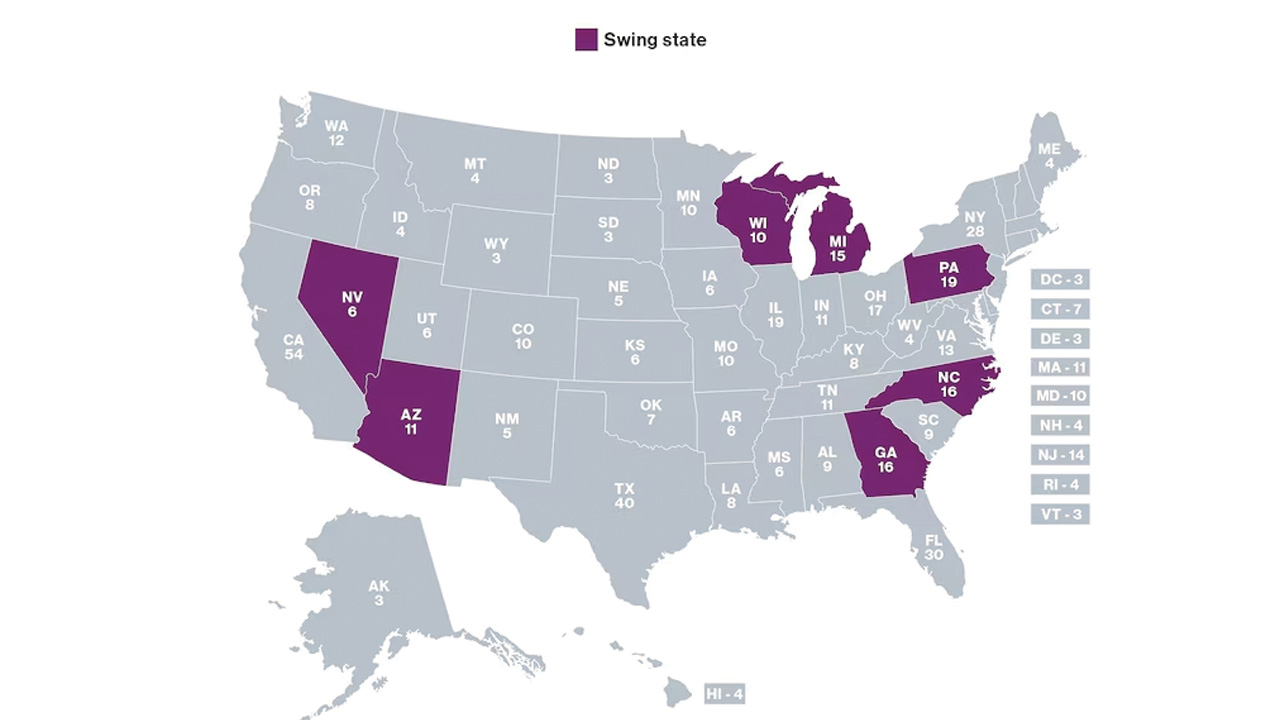
This overlap creates a powerful multiplier effect in swing states, where financial sector professionals often serve as opinion leaders and early adopters within their communities. But the devil is in the details, and we must look a little deeper into this group’s voting pattern to understand them.
Voting Pattern Analysis [17]
Historical voting patterns in the financial sector reveal several relevant trends:
Issue Prioritization [5]:
Regulatory environment: 76% cite as their top concern
Innovation policy: 62% consider crucial

Voting Behavior [15]:
Historically high turnout (averaging 85% in presidential elections)
A strong tendency toward economic policy prioritization
Track record of swing-voting based on financial policy positions
New Convergence Factors:
Traditional finance professionals increasingly hold crypto positions
Younger finance professionals (under 45) show a 58% crypto adoption rate
Growing overlap between fintech and traditional finance career paths
This demographic convergence suggests a new type of voter emerging: financially sophisticated, technologically adept, and highly engaged in policy outcomes.
The traditional finance sector’s voting patterns, combined with crypto adoption rates, create a constituency that:
Is more likely to vote than the general population
Shows higher sensitivity to regulatory and economic policy
Maintains significant influence in professional networks
Concentrates in politically crucial urban/suburban areas (aka population centers in swing states)
The implications for political strategy are significant: this isn’t just about capturing the “crypto vote” or the “finance vote,” but understanding how these overlapping constituencies create new political priorities and pressures.
The ETF Watershed Moment
Finally… Market Integration
The approval and launch of Bitcoin ETFs (and, more recently, Ethereum) marks a pivotal moment in mainstreaming cryptocurrency, fundamentally altering market dynamics and voter interests. This isn’t merely a financial milestone but a crucial shift in how millions of Americans interact with digital assets.
To get an indication of the current potential reach, let’s double-click into institutional adoption and what that may mean for this convergence.
Traditional Finance Integration [6]:
65% of conventional institutions are developing crypto strategies
Major banks incorporating digital asset services
Wealth management firms (72%) actively developing crypto offerings
Retirement Account Access [7]:
Potential exposure to 15.8 million retirement accounts
12% of 401(k) providers exploring crypto options
18% of IRA providers offering crypto exposure
Democratizing access across income levels
General Professional Integration [8]
22,000 financial professionals completed digital asset certifications in 2023
47% increase in crypto-related job postings across financial services
Key growth areas:
Digital asset risk assessment (38% of new certifications)
Custody solutions (31% of new job postings)
Trading desk integration (28% of positions)

This normalizes the ownership and usage of cryptocurrencies, but how does that connect with the broader election?
Voter Behavior Connection
The ETF moment creates a “threshold event” in voter behavior. A sort of Pragnanz-like effect, forcing us to create order from this crypto complexity, all manifesting in several key ways:
The “Ownership Effect”
Historical precedent: 401(k) investors showing higher engagement in market-related policies
Asset owners typically become more engaged in regulatory discussions
Increased support for pro-market policies among retail investors
Professional Updates:
Financial advisors becoming crypto-literate out of necessity
Compliance professionals begin developing expertise
IT sectors adapting to new infrastructure demands
Key swing state impact:
Financial centers developing crypto expertise
Job creation in supporting industries
Local government engagement with digital asset businesses
Voter Priority Shifts:
As crypto moves from speculative to mainstream, we should see:
Regulatory clarity becoming a kitchen table issue
Retirement security connecting to crypto policy
Innovation policy gaining broader relevance
The significance of winning this demographic is undeniable, as demonstrated by the Bitcoin 2024 conference held a few weeks ago. The event featured top figures from the crypto and finance sectors, along with two presidential candidates. It’s clear that the crypto demographic will influence this election, but what economic impact should we anticipate?
The Stakes
Economic Implications
The intersection of crypto policy and electoral politics represents more than just a novel voting bloc but signals a fundamental shift in America’s competitive position in global finance. This shift manifests in several quantifiable ways:
Job Market Transformation [9]
210,000+ blockchain-related jobs created in the U.S. (2023)
Average salary 32% higher than traditional finance positions
67% of positions are concentrated in swing-state metro areas
Key growth sectors:
Financial services integration (42%)
Compliance and regulatory tech (28%)
Infrastructure development (24%)
Tax Base Considerations [10]
Digital asset tax revenue potential: $11.4B annually
Regulatory clarity could unlock:
$320B in trapped institutional capital
$47B in potential state-level economic activity
15% increase in fintech startup formation
Global Competitiveness Metrics [11]
U.S. market share in global crypto transactions: 28%
Institutional capital ready for deployment: $165B
Key competitive pressures:
Singapore: 18% market share gain (2022-2023)
UAE: 12% market share gain
Switzerland: 8% market share gain
It’s paramount to remember that these numbers are from a “bear market” and what most would call a cyclical low point in the “typical” 4-year crypto cycle. In plain speak, this is a multi-year low point with expected multiples on return from this point. This demographic sees a yellow brick road and will vote accordingly to stay the path.
Voter Issues Matrix
The political implications reach beyond mere economics, forming a complex web of voter priorities that transcend traditional party lines. This demographic consists mainly of moderates who vote based on current narratives and the country’s potential future. But what’s interesting about this group is the aligned goals while having overlapping party-specific alignments.
Primary Voter Concerns
Regulatory Clarity: 84% cite as “very important”
Investment Protection: 76% prioritize
Innovation Support: 72% emphasize
Data Privacy: 68% consider crucial
Cross-Party Appeal Factors
Young Conservative Alignment:
73% support market-driven innovation
68% oppose excessive regulation
62% prioritize financial privacy
Progressive Tech Adoption:
71% support financial inclusion initiatives
66% favor environmental considerations
58% emphasize consumer protection
Policy Framework Priorities
Voter support for specific policy initiatives:
Clear regulatory guidelines: 88%
Innovation sandboxes: 76%
Consumer protection frameworks: 72%
International competitiveness measures: 68%
So what does this mean? Why is it important, and why do we watch swing states?
Electoral Implications

The convergence of these factors establishes distinct electoral pressure points with potential presidential implications. As I highlighted, two of the three candidates strongly support crypto, so what insights do they have that others lack?
Swing State Impact
Tech hub concentration in key electoral districts:
Georgia: 145,000 fintech/crypto jobs
Arizona: 98,000 related positions
Nevada: 72,000 industry employees
Demographic Voting Power
27% crypto ownership among likely voters
82% voter participation rate among holders
44% identify as “swing voters” on economic issues
Electoral Implications
State-by-State Impact Analysis
The convergence of crypto adoption and electoral demographics creates distinct voting patterns in key battleground states, with particularly significant implications for the 2024 election cycle.
Florida: The Emerging Crypto Hub [12]
Total crypto/fintech employment: 360,000
Regional distribution:
Miami-Dade: 145,000 jobs (40.3%)
Tampa Bay: 89,000 jobs (24.7%)
Orlando: 72,000 jobs (20%)
Jacksonville: 54,000 jobs (15%)
Industry presence:
385 registered crypto companies
$8.2B monthly trading volume
34% year-over-year job growth
Electoral significance:
1,250 new crypto-related business registrations (2023)
72% of crypto employees are registered voters
28% increase in industry PAC contributions
Georgia: The NYC of the South
Total industry employment: 145,000
Key metrics:
Atlanta metro: 115,000 jobs
58% voter registration rate among employees
44% identify as swing voters
Arizona: Emerging Tech Center
Total related positions: 98,000
Distribution:
Phoenix: 75,000 jobs
Tucson: 23,000 jobs
66% voter participation rate
41% of first-time industry voters
Nevada: Digital Finance Hub
Industry employment: 72,000
Concentration:
Las Vegas: 45,000 jobs
Reno: 27,000 jobs
63% likely voter rate
38% independent voters
Demographic Voting Power: Refined Analysis
Voter Registration Patterns
Overall crypto holder registration: 27% of likely voters
Registration by age group:
18-29: 68% registration rate
30-44: 74% registration rate
45-60: 81% registration rate
60+: 85% registration rate
Voting Behavior Metrics
Participation rates:
82% overall voter turnout among holders
44% swing voter identification
36% of first-time voters in 2020
58% plan to vote based on crypto policy
Income and Education Correlation
Voting preference by income:
$100k: 76% participation rate
$50k-$100k: 68% participation rate
Under $50k: 54% participation rate
Education level impact:
Graduate degree: 84% Participation
Bachelor’s degree: 78% Participation

Some college: 65% Participation
Policy Influence Patterns
Priority Issues Among Crypto Voters
Regulatory framework: 84% crucial
Economic innovation: 76% important
Job creation: 72% significant
International competitiveness: 68% relevant
Voting Pattern Shifts [13]
38% changed party affiliation based on crypto stance
45% would cross party lines for pro-crypto candidates
52% consider crypto policy a “top 3” voting issue
Conclusion
The emergence of the crypto voter represents more than just another interest group in American politics – it signals a fundamental shift in how technology, finance, and political participation intersect. With approximately 70 million Americans now holding digital assets in some form [16], their collective voice carries significant electoral weight, particularly in key swing states.
The parallel with the Clinton-era internet revolution is instructive: just as the information superhighway transformed American society and politics in the 1990s, cryptocurrency and blockchain technology are reshaping voter priorities and political alignments today. The key difference lies in the speed and directness of economic impact, with digital assets immediately affecting investment portfolios and retirement accounts.
As we approach the 2024 election, candidates and parties that acknowledge and tackle the concerns of this emerging demographic will gain a crucial advantage in tightly contested states. The crypto voter has emerged as a formidable political force, transcending traditional party lines and challenging conventional political wisdom on technology, regulation, and economic policy.
Clinton Presidential Library. (1997). “Framework for Global Electronic Commerce.”
U.S. Bureau of Labor Statistics. (2023). “Financial Activities: Employment Statistics.”
FINRA Foundation. (2023). “The State of U.S. Financial Professional Credentials.”
U.S. Census Bureau. (2023). “Metropolitan Statistical Areas: Financial Employment.”
Morgan Stanley. (2023). “Financial Sector Voting Patterns.”
Deloitte. (2023). “Global Blockchain Survey.”
Federal Reserve Bank. (2023). “Survey of Consumer Finances.”
CFA Institute. (2023). “Investment Professional of the Future.”
LinkedIn Economic Graph. (2023). “Digital Asset Job Market Analysis.”
PwC Financial Services. (2023). “Crypto Assets: The Institutional Perspective.”
Florida Department of Economic Opportunity. (2023). “Digital Finance Industry Report.”
Gallup Poll. (2023). “Digital Asset Policy and Voter Preferences.”
Pew Research Center. (2023). “Demographics of Digital Asset Ownership.”
Galaxy Digital Research. (2023). “Institutional Adoption of Digital Assets”
Pew Research Center. (2023). “Financial Sector Political Engagement Study”
Gemini. (2023). “Global State of Crypto Report”
Harvard Kennedy School. (2023). “Digital Assets and Voter Demographics”
Brookings Institution. (2023). “Cryptocurrency Adoption and Voter Behavior”
American Enterprise Institute. (2023). “Digital Asset Policy Survey”