I retyped the same prompt four times in one afternoon.
Same brand voice instructions, same target audience, same structural preferences, and the same “make it friendly but professional” qualifier that I’d apparently memorized through sheer repetition. Four different content pieces, four identical setups, four sessions where the AI had zero memory of the last.
By the fourth time, I was more frustrated with myself than with the AI.
I’d been building agents across education, gaming, fitness, and finance for months at this point, and I’d seen what structured systems could do. Sales agents driving 30% conversion uplifts across hundreds of locations, and small gaming studios shipping at quality levels that used to require triple the headcount. Content timelines were collapsing from weeks to days. And here I was, manually retyping instructions like it was 2023.
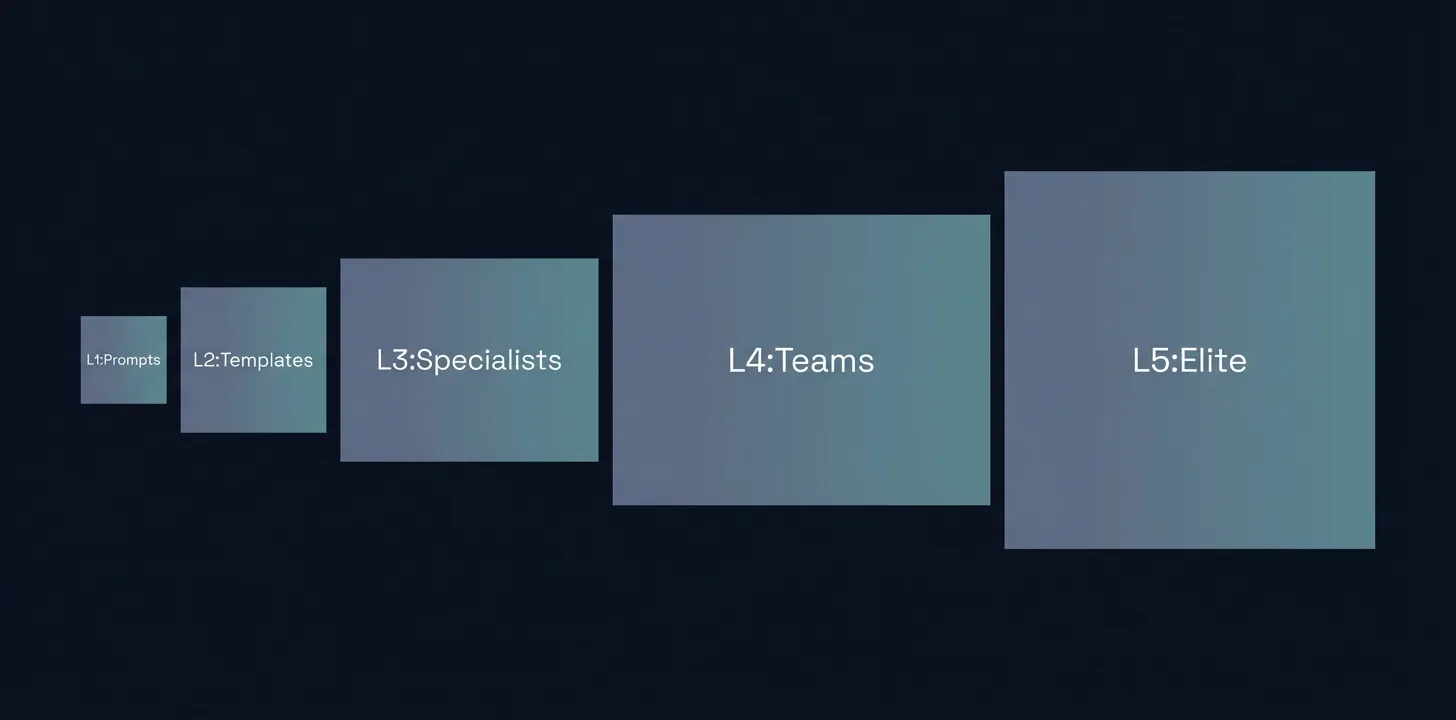
The gap between using AI and building AI infrastructure is a series of walls you slam into, one after another, each teaching you something the previous level couldn’t.
This article is about those walls, and I hit all of them. I’m working on a companion piece that breaks down the maturity model as a clean framework with the structural details. This article is the version where I tell you what I got wrong, what it cost, and what finally clicked.
Level 1: The Blank Prompt (Where Everyone Starts and Nobody Admits They Stay)
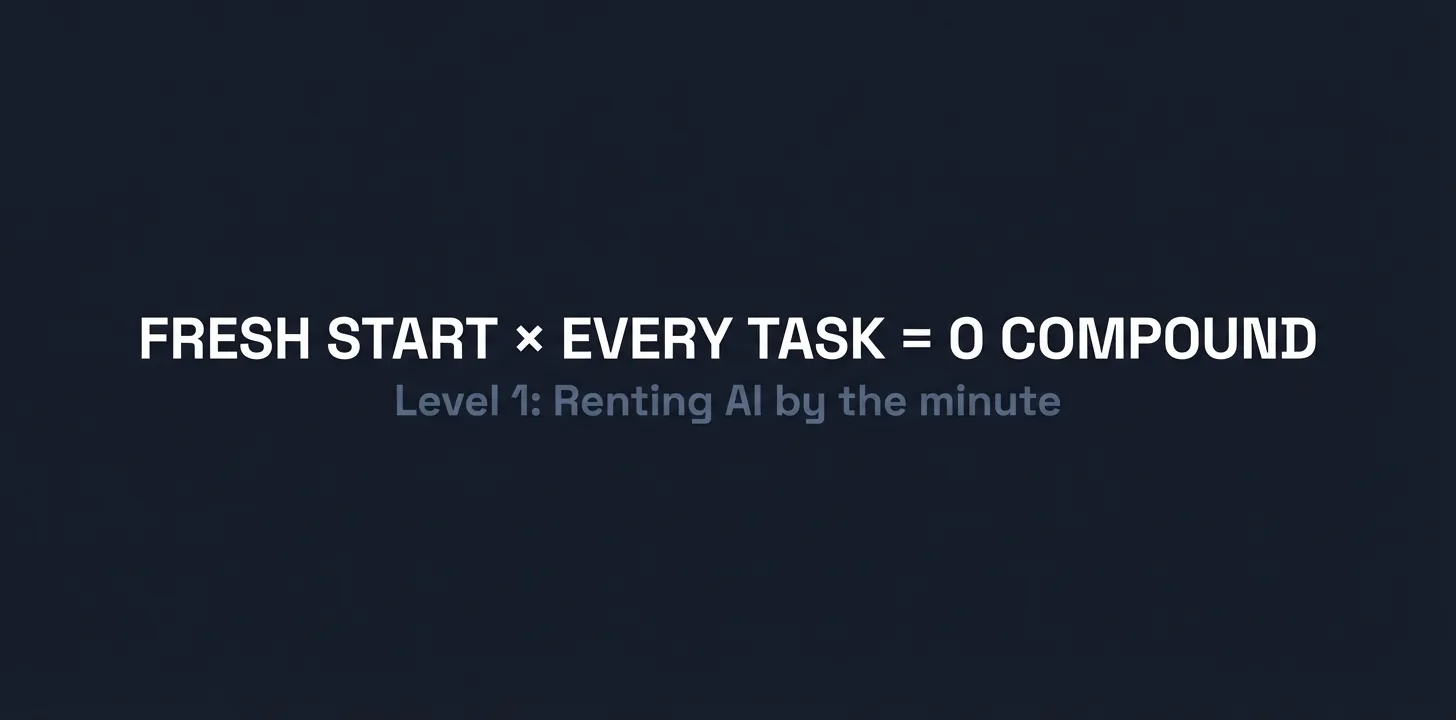
Here’s the thing about Level 1: it feels productive. You open a chat window, describe what you need, and get something back in 30 seconds. Compared to doing everything manually? That’s a win. You tell yourself you’re “using AI” and technically you’re right.
But you’re using it the way someone uses a rental car. You get in, drive somewhere, return it, and next time you start the whole process over, because the car doesn’t remember your seat position or your usual route and it never improves.
I lived here for months, convinced I was being sophisticated because the outputs were decent.
The pattern looks the same everywhere. A marketing team has one person asking for social posts and another requesting email copy, while a third generates ad headlines. Each request lives in its own isolated session with no memory of the others, so nothing stays consistent across outputs and none of it compounds.
You know you’re stuck at Level 1 when you start a fresh conversation for every task and retype similar instructions multiple times per week. The other tell is the 15-30 minutes you spend editing every output, because you can’t trust it without supervision.
The cost hides in plain sight. You’re paying a subscription fee for a tool you have to re-teach from scratch every time you use it, with no version control on your prompts and no iteration on what works. You’re renting AI’s brain in 30-second intervals and building zero equity.
So what broke me out? The retyping. Honestly, I just got tired of it. Anyone who knows me knows I have approximately zero patience for repetitive work, so the moment I caught myself copy-pasting the same instruction block between sessions, I thought: this is insane. There has to be a way to make this stick.
There was. Templates.
Level 2: Templates (The Plateau That Feels Like a Peak)
I built templates for everything and felt smart about it. There was a blog post generator that knew our brand voice, target audience, and structural preferences, and a social media assistant with pre-loaded tone guidelines. An email campaign writer output consistent formats. Custom GPTs carried detailed instructions and example outputs.
It was an upgrade, no question about it. The AI remembered context now, so we weren’t starting from zero every session, and one person could generate ten LinkedIn posts in the time it used to take to write one. Outputs were consistent, brand voice was recognizable, and structure was repeatable.
I thought we’d made it.
We hadn’t.
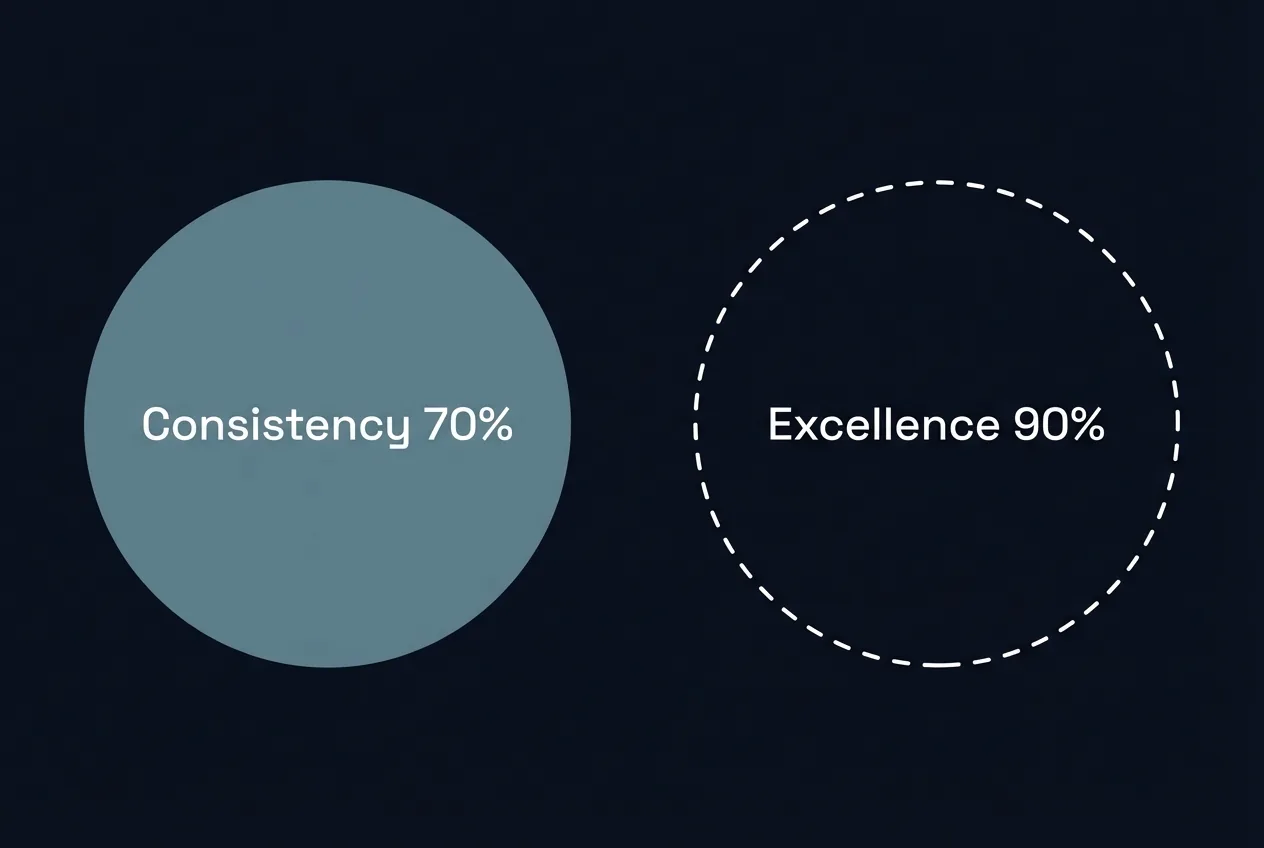
Most teams should stop here for a while, and if the outputs are good enough for the job, nothing I say next should bother you. The problem with them is subtle and I didn’t see it for weeks: templates give you consistency without giving you depth. Our blog post generator produced the same structure whether we were writing about feature announcements or thought leadership, and our social media assistant used the same tone for developers and executives. The template didn’t know the difference because I didn’t teach it to care.
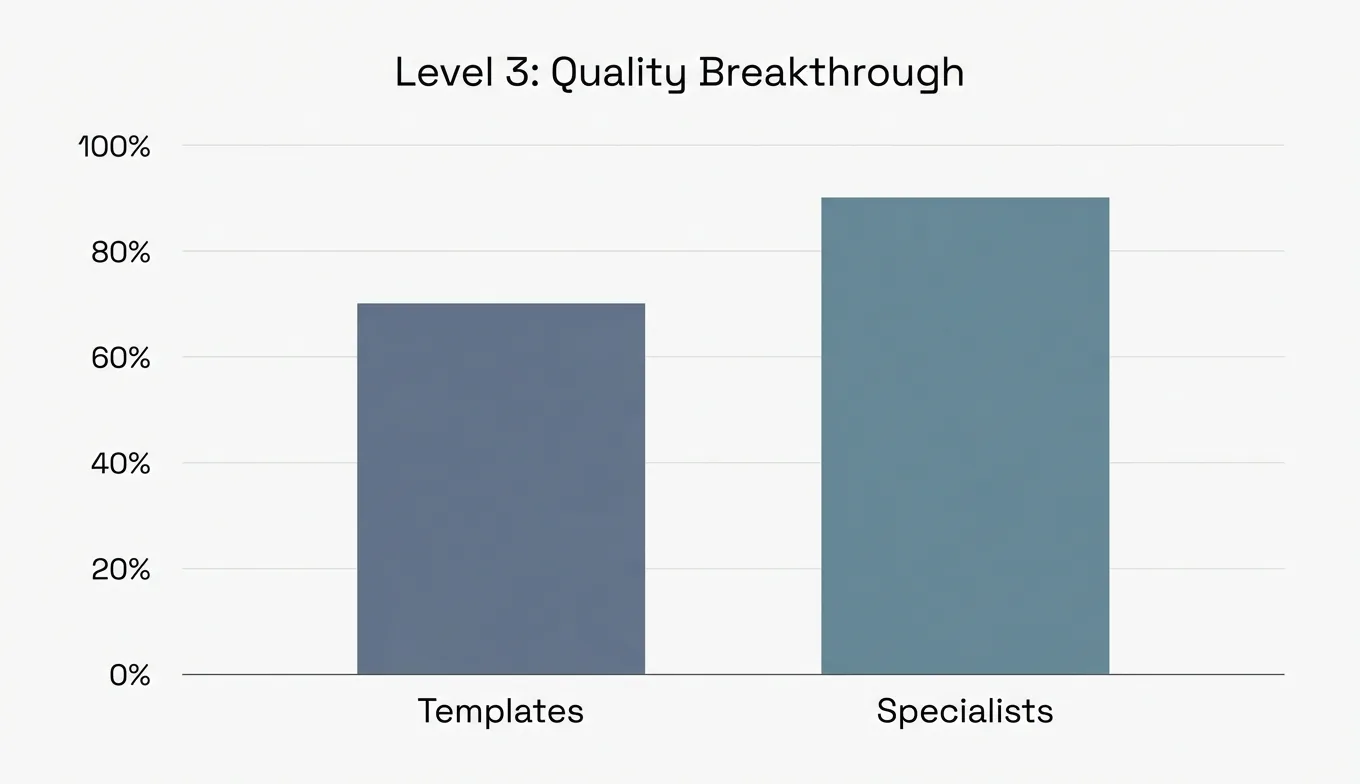
We’d industrialized mediocrity. Every output was 70% good, and we could repeat that 70% at any scale we wanted, but we couldn’t break through it. A template carries instructions, and instructions are not expertise.
I noticed this most clearly when we tried using our SEO template for technical content. The keywords landed in all the right places and the structural guidelines were followed to the letter. The output was technically optimized and it completely missed the search intent, because it was following rules without understanding why the rules existed. It couldn’t tell the difference between keyword stuffing and semantic relevance, and a checklist is not an understanding of SEO.
You know you’re stuck at Level 2 when your custom GPTs handle familiar content fine but fail on anything outside the template’s comfort zone. Every output hits 70% and you can’t figure out why quality won’t budge higher, because the ceiling is visible and you keep bumping into it.
That’s when it clicked: better templates were never going to get us there.
We needed specialists.
Level 3: Specialists (Expertise Without Collaboration)
This is where things got interesting. And by interesting, I mean I accidentally created twelve specialists who couldn’t talk to each other.
Instead of one blog post generator, we built six: an SEO Strategist, a Hook Architect, a Brand Voice Guardian, a CTA Specialist, a Technical Accuracy Reviewer, and a Visual Storyteller. Each one had deep expertise in a single domain and understood both why its role mattered and how to judge the quality of its own output.
The outputs improved immediately. The SEO Strategist went well past inserting keywords: it analyzed search intent, evaluated keyword difficulty, and structured content for featured snippets. The Hook Architect went past writing openings and started applying psychological frameworks, knowing which archetype worked for which audience. For the first time, the outputs felt like they came from domain experts instead of generic assistants.
Then the coordination problems started.
The SEO Strategist would optimize for search, but the Brand Voice Guardian would reject the keyword-stuffed headline. The Hook Architect would write a contrarian opening, but the CTA Specialist would flag it as misaligned with the conversion goal. Everyone was doing excellent work, in conflicting directions.
I spent weeks just managing handoffs. The SEO analysis would finish, I’d manually pass insights to the Content Creator, they’d generate a draft, I’d send it to the Brand Guardian for review, they’d send back feedback, and somewhere in that process we’d lose 30% of the original SEO recommendations because nobody had a standardized format for passing context between agents.
We’d built expertise silos, powerful in isolation and useless the moment a job needed a second perspective.
You know you’re stuck at Level 3 when individual agents produce work that impresses you but the combined output is worse than any single agent’s contribution. You spend more time coordinating handoffs than reviewing the work itself, and you’ve become the bottleneck in your own system.
The fix seemed obvious: make them work together.
It was obvious. It was also a trap.
Level 4: Teams (The Productive Chaos)

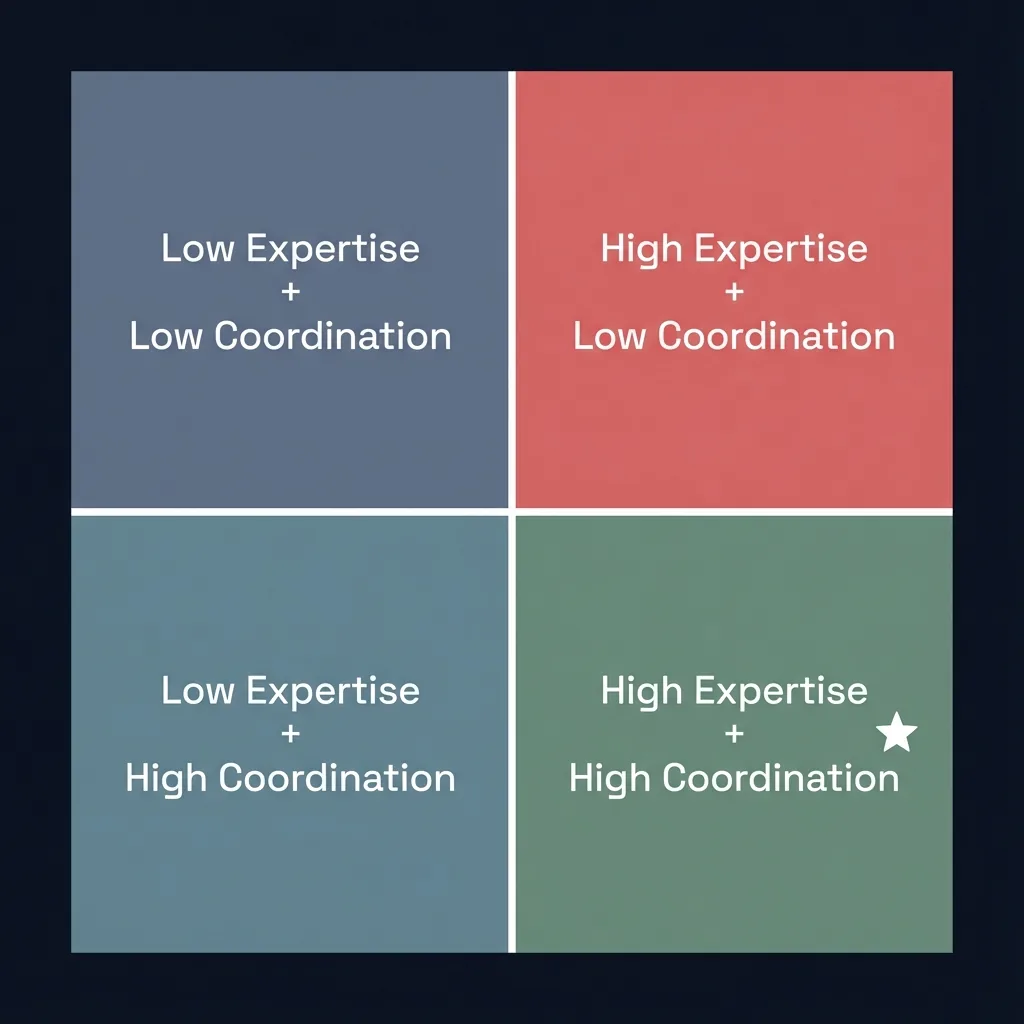
I started running multiple agents on the same project, in parallel. A content workflow might involve twelve agents across a Research Team, a Creation Team, and an Optimization Team, and the output quality jumped to 85%, sometimes 90%.
But coordination became its own full-time job.
What I didn’t anticipate about multi-agent systems is that parallel execution is amazing right up until everyone finishes at different times and you realize there’s no standardized way to merge the outputs. The Research Team hands off insights to the Creation Team in whatever format it happens to produce. The Hook Architect writes an opening based on one psychological driver while the Audience Psychologist has identified a different primary motivation. The SEO Specialist optimizes the headline, and the Brand Guardian calls it off-voice.
It was the Level 3 problem again, with more agents and still no system for resolving disagreements. Do you optimize for SEO ranking or brand consistency? Do you prioritize emotional resonance or conversion metrics? Every project became a negotiation between agents who each thought their domain was the most important one.
I spent one full week just trying to define a workflow that wouldn’t create bottlenecks. The UI Designer needed to finish before the Frontend Developer could start, and the Backend Architect couldn’t begin without API specs. The QA Engineer, meanwhile, sat idle until everyone else delivered. One agent delays and the whole chain stalls.
We were amplifying output and amplifying complexity in equal measure. The teams had no orchestration and the handoffs had no format, and the quality criteria one agent carried contradicted the next agent’s.
You know you’re stuck at Level 4 when the team produces great individual work but coordination chaos eats the gains, and bottlenecks cascade because one delayed agent blocks everything downstream. You spend more time managing agents than using their outputs.
I had plenty of process. What I was missing was architecture.
This is the wall that took the longest to get past, partly because it’s also the one where adding more agents looks most like the answer, because every gap in the workflow looks like a missing role. Months of building, tearing down, and rebuilding taught me otherwise. The answer, when it finally came, was adding structure to the agents I already had, not adding more of them.
Level 5: Orchestration (Where It Finally Compounds)
I stopped building features and started building infrastructure. The distinction matters.
What works is 20-40 specialized agents organized into departments. By departments I mean groups with clear mandates, documented workflows, and quality gates at every handoff, a different animal from the ad-hoc teams of Level 4. Engineering, design, marketing, product, testing, operations, and writing, each running 3-8 agents depending on complexity.
Yes, 20-40 agents sounds like exactly the “more agents” mistake I just warned you about. The difference is what sits underneath them. The breakthrough turned out to be the specification system: every single agent is defined by a production-grade spec with five components that took months to get right. I’ll go deep on each of them in a dedicated maturity model article. For now, the short version of why each one matters.
Input/output validation. Every agent declares what it needs and what it delivers. The SEO Content Strategist requires a target keyword, search intent analysis, and competitive landscape, and it outputs keyword clusters, content structure recommendations, and internal linking strategy. Missing inputs get flagged before work starts, which ends the “I didn’t have enough context” failures.
Quality criteria. Every agent has measurable quality thresholds, and a score below the threshold triggers a self-critique loop, so instead of failing silently the agent explains why it fell short and proposes fixes.
Self-critique prompts. After generating output, every agent runs a self-evaluation. Does this hook use a recognized psychological archetype? Does the CTA align with the primary motivation from the audience research? Quality control happens before a human ever sees the draft.
Edge case documentation. Every agent documents its known failure scenarios. The Twitter/X Specialist knows it struggles with highly technical audiences, because engineers prefer depth over snark. When it detects that edge case it warns you, where it would otherwise have silently produced bad work.
Real examples. Every agent ships with examples of excellent work drawn from published pieces, so it pattern-matches against proven success, not theory.
This is what Alexandria, the platform I build and run today, eventually became: the system that lets all of this persist and compound across projects instead of getting rebuilt from scratch every time. But that’s a separate story.
The compounding effect is the whole point. With each project the agent specifications get sharper and the quality thresholds get refined. The edge case documentation grows. The system improves with use.
Infrastructure that gets better the more you use it. That’s the difference between Level 4 and Level 5: the architecture underneath the agents, not the count of them.
What I’d Tell Myself Six Months Earlier
You can’t skip levels. I know the temptation, because I tried: I thought we could jump from templates straight to full orchestration, and we couldn’t. Each level teaches you something the next level requires, and there’s no shortcut through the learning.
Templates teach you that consistency isn’t enough. Specialists teach you that expertise without collaboration creates silos, and teams teach you that collaboration without structure creates chaos. You have to feel each failure before the next solution makes sense.
The timeline that worked for me: months 1-2 were about building specialist agents and learning why specialization matters. Months 3-4 added parallel execution, which is where I discovered coordination chaos firsthand. Months 5-7 went to quality schemas and orchestration frameworks, and that’s when the infrastructure finally started to compound.
Be honest about where you actually are, meaning where you operate day-to-day rather than where you want to be or where your LinkedIn bio says you are. If you’re retyping instructions, you’re at Level 1. If you have Custom GPTs but quality has plateaued, you’re at Level 2. Specialists that don’t collaborate put you at Level 3, and teams drowning in coordination overhead put you at Level 4.
Most people reading this are at Level 1 or 2, and that’s fine, because everyone starts there. The question is whether you’re going to stay.
The Prompt I Should Have Stopped Retyping
Remember those four identical prompts from the opening? Same brand voice, same audience, same structural preferences. I typed them out manually, every time, for weeks.
Today those instructions live inside agent specifications that remember everything, improve with each use, and coordinate with other agents automatically. I couldn’t go back to the blank prompt if I tried. Once you’ve seen what compounding infrastructure looks like, retyping the same instructions feels like writing letters by candlelight when you have electricity.
The gap between AI users and AI builders comes down to one thing, and it’s neither talent nor budget: whether you’re willing to build systems that outlast any single prompt.
Start with one specialist. Give it expertise, not just instructions. Build the infrastructure around it: input/output validation, quality criteria, self-critique. Get it working, then add another, then connect them.
One agent at a time. One department at a time. One level at a time.
That’s how it compounds.