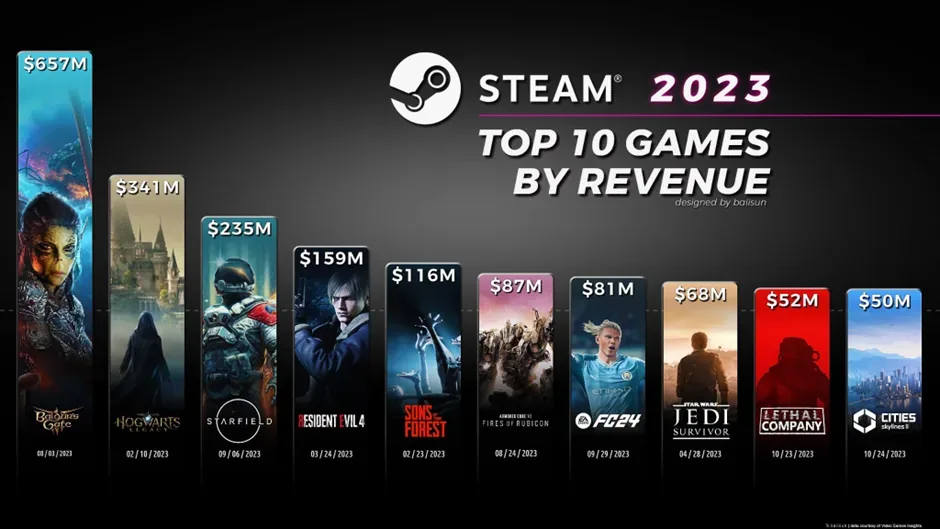
Another year and another top showing for mobile games in the Games industry. But, unlike in years past, mobile growth was negative for the first time since its inception.
For non-industry gamers, this is more of a continuation of the disruption in distribution that began with Apple’s IDFA. Regardless, there’s no doubt that mobile still dominates despite these speed bumps. Let’s get into the numbers.
Mobile Gaming: Still the Giant
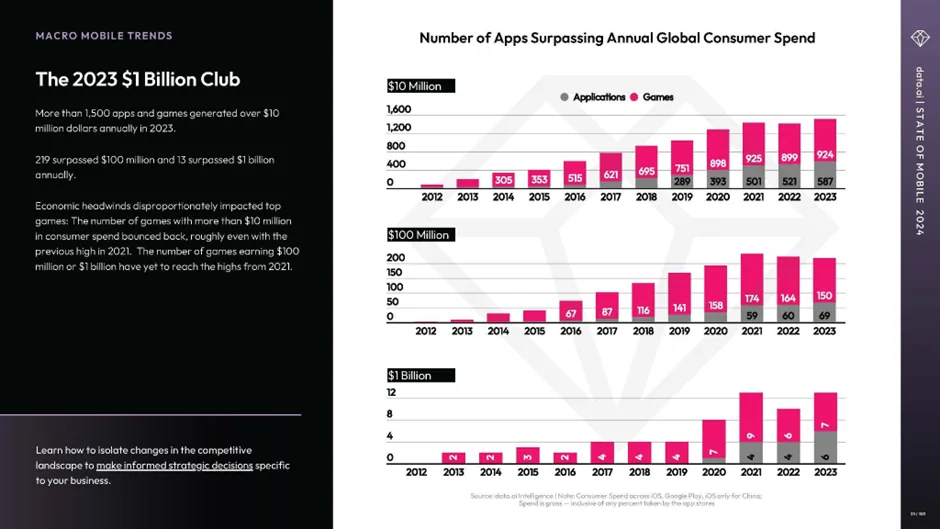
Data.ai’s annual report highlights the unmatched scale of mobile gaming. With nearly 1,000 apps generating over $10 million annually and 7 surpassing $1 billion, the commercial dominance of mobile gaming is undeniable.
It’s pretty simple, really: everyone has a phone. The accessibility and reach of mobile games allow them to capture a global audience, creating a revenue scale that PC and console games struggle to match.
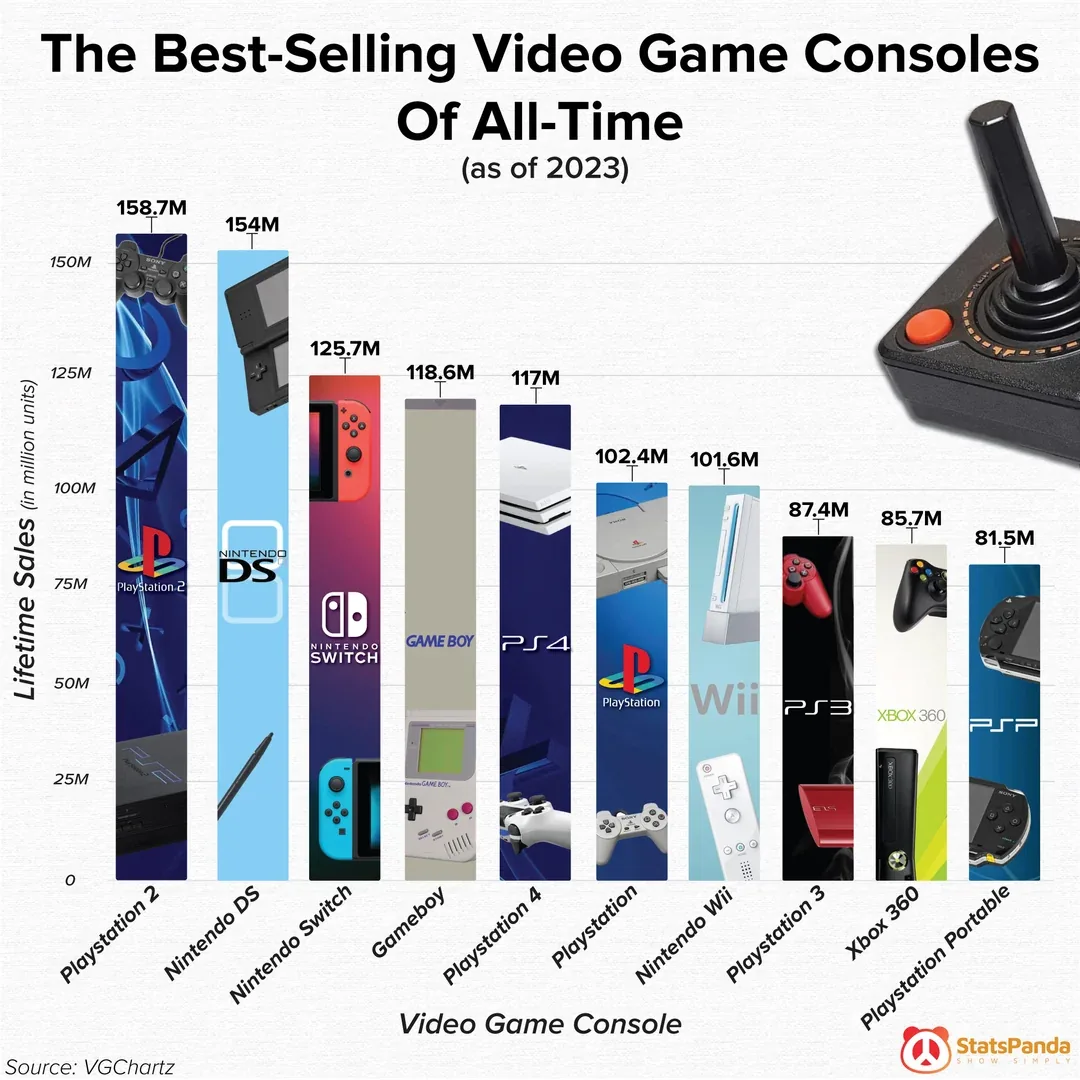
Again, it’s easy math; everyone has a phone, and few have a PS5 or gaming PC. Additionally, the advent of Free to Play (F2P) has created a $0 value proposition that only requires your time to get started.
PC and Console: A Pursuit of Prestige
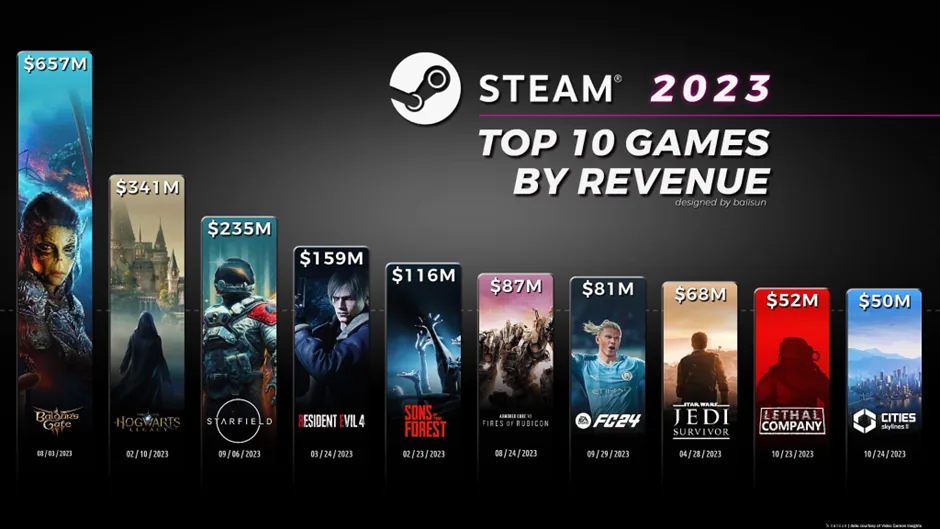
When we look at the PC and console sectors, the focus shifts. The top 10 games by revenue on platforms like Steam showcase a trend toward critically acclaimed, high-budget titles.
These games prioritize narrative depth and gameplay sophistication. Look no further than Baldur’s Gate 3 ($657m) and Hogwarts Legacy ($341m), which resonate deeply with core gaming audiences. The disparity in reach is apparent as gamers vote with their pocketbooks: Steam had five games over the $100m mark… mobile had 150 games.
This isn’t intended to critique console and PC games; instead, I view them as franchise installments that provide fans with fresh narratives and experiences. A continuation on top of x. The holistic path of books, movies, TV shows, and games to round out fan experiences.
Baldur’s Gate 3, More Harry Potter, Resident Evil 4, The annual FC game from EA. They serve a different purpose: to expand or build on what already exists. With this in mind, we should measure their success more critically than purely commercial.
The Mobile Pivot of Traditional Giants
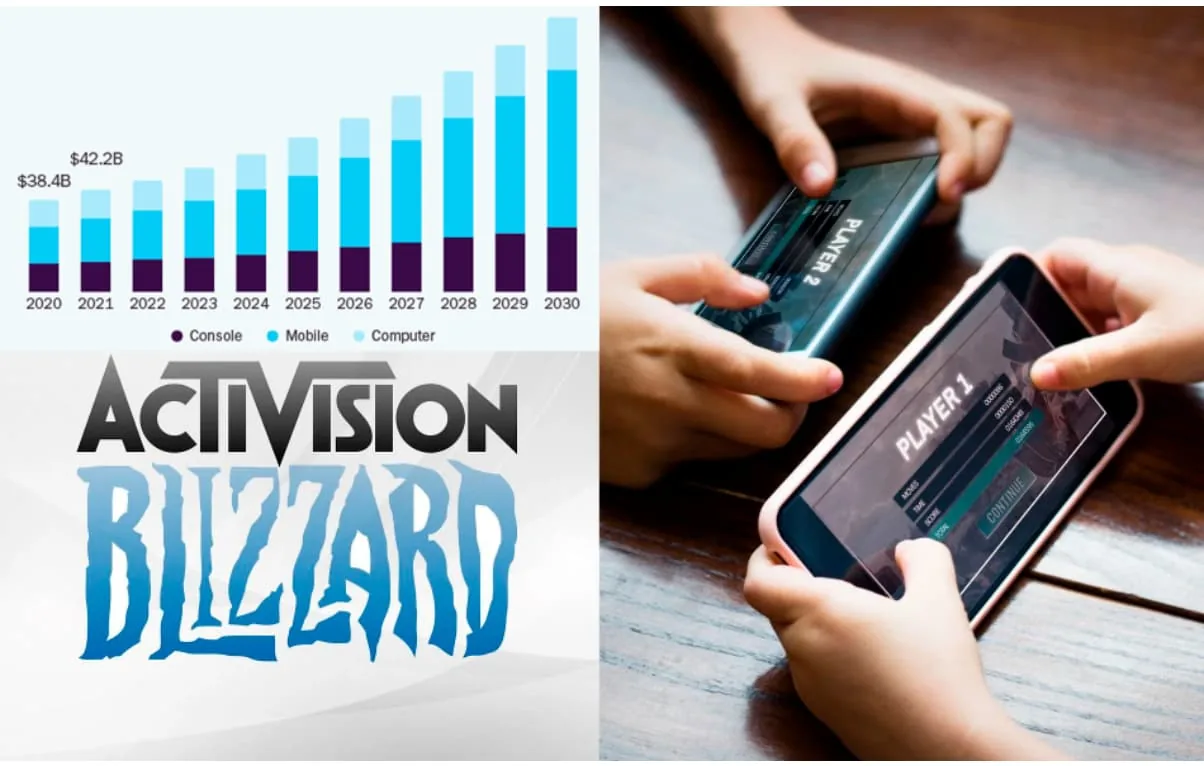
Even PC and console gaming titans, like Activision Blizzard, are pivoting toward mobile to secure their financial future. As highlighted in Activision’s annual revenue growth projections, mobile gaming is becoming an essential revenue stream, outpacing traditional segments in sheer growth potential. When studios with that much prestige start chasing mobile, they’ve already done the math on where the audience is.
It’s a no-brainer, and a straightforward cost-benefit analysis reveals that the most profitable venture for an established studio is to develop mobile games that are inexpensive, quick to produce, and easily scalable.
Let’s generalize the inputs for simplicity:
Success in AAA takes hundreds of millions of dollars in development and marketing before players play the game and nearly a decade to develop with marginal upside.
Quality mobile games cost a fraction, a maximum of a few years, and a “moonshot” upside.
Looking at projects through this lens, the franchises and sequels pointed out above make much more sense, since recurring IP can mitigate the risk of shipping a flop when you already have a fandom to work with.
Scale vs. Prestige: Two Sides of Gaming
While mobile gaming’s strength lies in its scale and reach, PC and console games dominate in terms of acclaim and dedicated fan bases. The disparity in its reach is stark: mobile’s audience encompasses billions (actually, 3.2b) globally, while PC and console players number in the hundreds of millions.
Despite this, PC and console developers are closing the gap, building mobile spin-offs and adaptations that put established IP in front of a far bigger audience.
This fad is only beginning to creep into Western markets but has been a mainstay in Asia. When looking at the next big game or collab, we can review the hottest IPs from pop culture, often manga.
Closing Thought
Gaming in 2023 showcases a continuing dynamic: mobile gaming as the revenue kingpin and PC/console gaming as the bastion of prestige. A greater convergence of these two worlds is inevitable, with the first signs from traditional gaming industry leaders. Mobile keeping its lead was never the open question. What’s open is whether PC and console can carry their appeal onto mobile without flattening it.
Can they continue upping the user experience on mobile without damaging the hardware sales they rely on? With such constant output, will IP fatigue hit game franchises like cinema stalwarts Star Wars and MCU? Mobile’s first down year left the lead intact and moved the fight somewhere else.
If you made it this far and enjoyed the content, you can get a notification for new articles by subscribing!