If you’ve been watching the crypto gaming space lately, you’ve probably seen Telegram games mentioned approximately 47 times per day. Hamster Kombat hits 300 million users. Catizen does $30M in revenue. NotCoin distributes tokens to 40 million players. And you’re sitting there thinking: “Wait, people are building serious games in a messaging app?”
Yeah. They are. And it’s working in ways that have surprised basically everyone, including me.
Here’s what I wish someone had explained to me six months ago when I first heard about Telegram gaming and dismissed it as “another blockchain game gimmick.” I was wrong on the gimmick call: this is infrastructure, and it quietly solves problems mobile gaming has struggled with for years.
TL;DR: The 30-Second Version
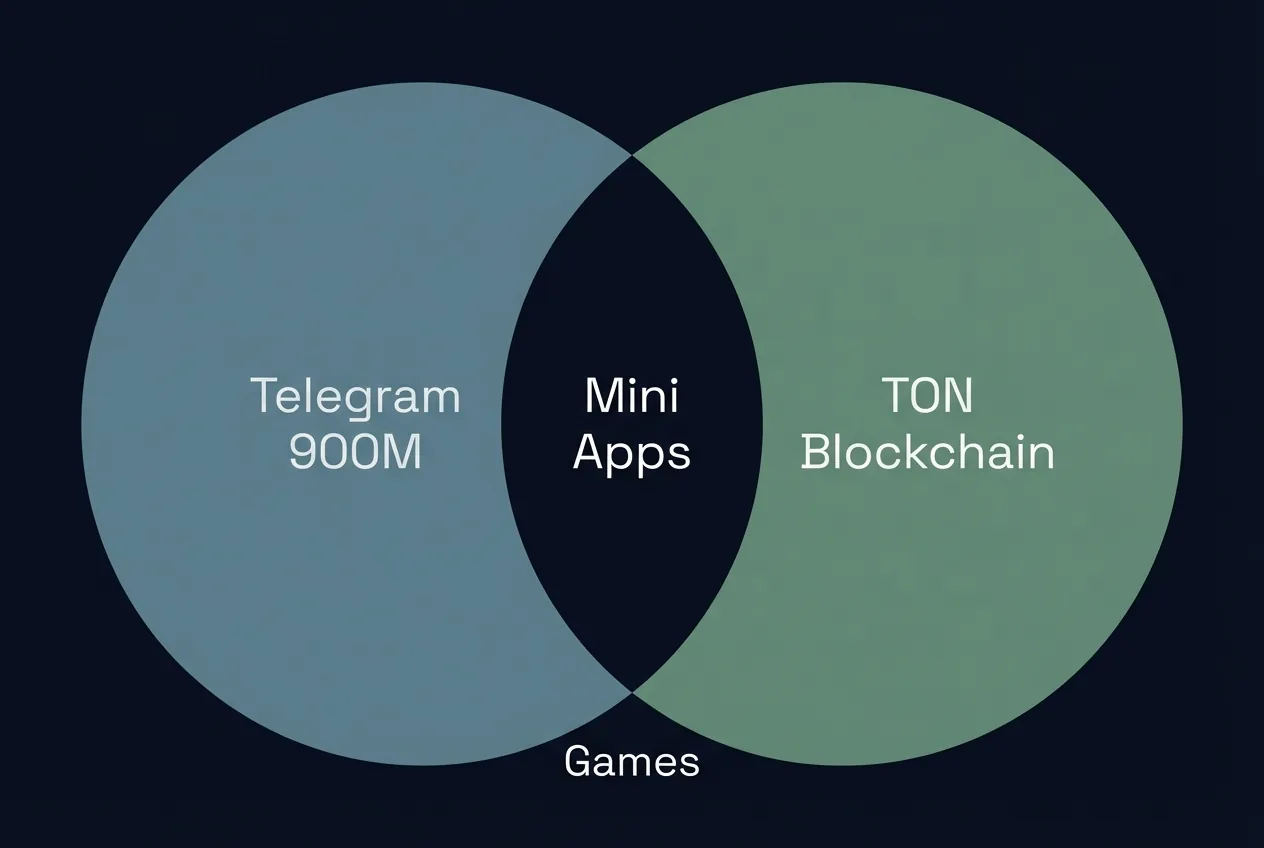
What it is: Games that run directly inside Telegram using “Mini Apps” (basically web apps) connected to the TON blockchain for payments and asset ownership.
Why it matters: 900 million users with built-in social, payments, and distribution. No app store approvals, no 30% platform fees, no download friction.
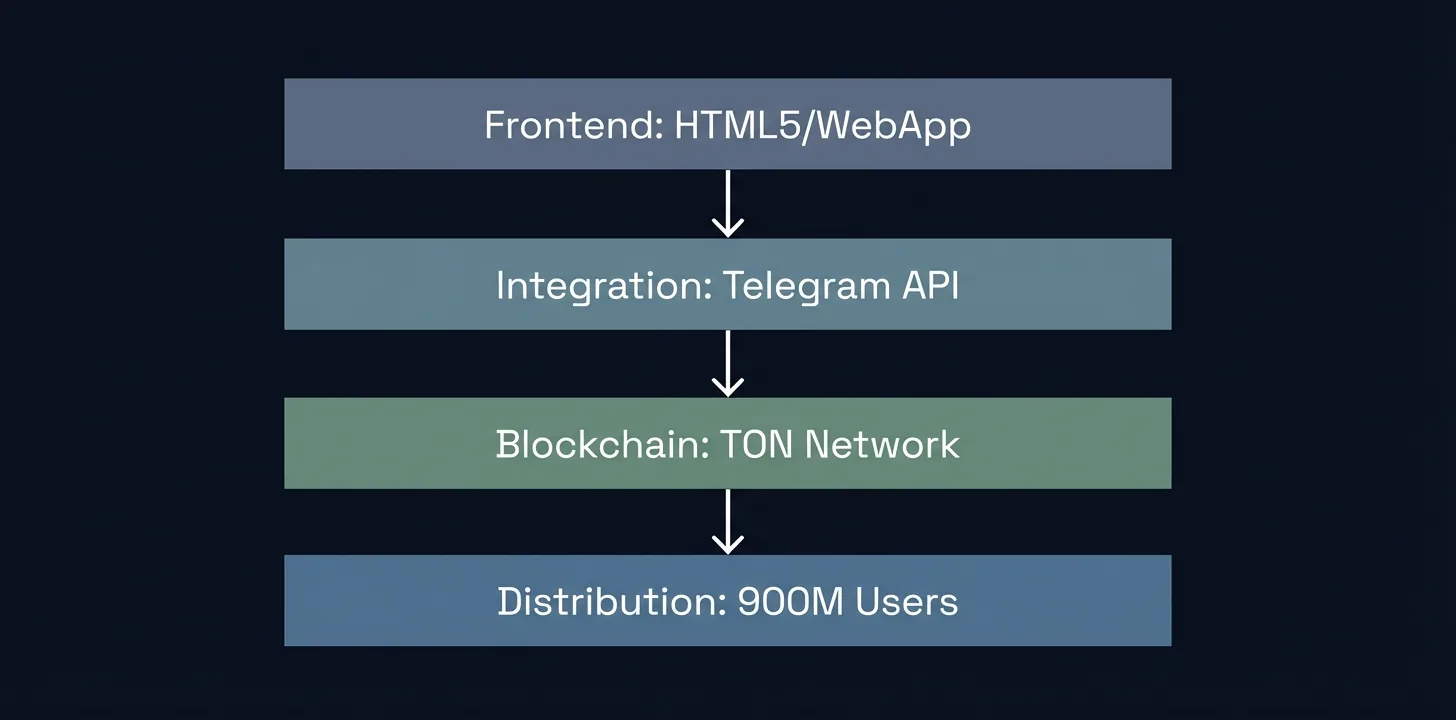
The tech: HTML5/WebApp running in Telegram’s client, integrated with TON blockchain wallets, distributed through channels/groups, monetized through crypto payments.
The catch: Limited by web browser constraints, crypto payment friction for normies, regulatory uncertainty.
The opportunity: If you can make casual gaming crypto-native without users noticing the blockchain part, Telegram gives you distribution that App Store/Google Play can’t match.
Now let’s get into how this actually works.
The Technical Architecture (Simplified)
Telegram Mini Apps are Progressive Web Apps (PWAs) running inside Telegram’s in-app browser, wired straight into the chat features and TON blockchain wallets. Nothing native about them.
OK, here’s the stack:
The frontend layer is built with HTML5, CSS, and JavaScript (React, Vue, or vanilla). It runs in Telegram’s WebView (basically a browser inside the app). You get access to Telegram APIs for user data, chats, and payments. No app store review process. Deploy like a website.
The integration layer is where it all comes together. Telegram’s Bot API handles commands and interactions while the WebApp SDK manages the interface controls, TON Connect links blockchain wallets, and the social graph opens up the moment a user grants permission.
The blockchain layer runs on TON for payments and NFTs. Smart contracts handle game logic and economics. TON Storage manages decentralized assets. Jetton tokens power in-game currencies.
Distribution happens through Telegram channels (broadcast to millions), group chats (viral loops built-in), bot commands (one-click game launch), and deep links for sharing scores and inviting friends.
The genius is in the integration. Telegram’s APIs give you social features that mobile games spend millions building. The TON blockchain gives you monetization without app store restrictions. And the WebApp architecture means you deploy updates instantly. No review process, no version fragmentation.
Why Telegram Games Work (When Facebook/WeChat Didn’t)
Let me address the obvious question: haven’t we tried games in messaging apps before?
Yeah. Facebook Messenger games mostly failed. WeChat mini-programs work in China but haven’t replicated globally. So why is Telegram different?
1. Crypto-Native Payments
This is the big one. Facebook and WeChat games had to route payments through existing systems: credit cards, PayPal, platform currencies with exchange rate friction. Telegram games use TON’s native cryptocurrency. Instant global payments with no geographic restrictions. Peer-to-peer transactions with no intermediary taking 30%. Permissionless monetization with no payment processor approval. Built-in scarcity for digital assets.
2. 900 Million Users Who Actually Use It
Telegram is infrastructure, not a social network people check occasionally. In many countries, it’s the primary communication tool for communities, businesses, and media. Daily active users are engaged users, not passive scrollers.
3. Channel Distribution is Insane
Telegram channels can have millions of subscribers. When a game launches in a popular crypto channel, it gets millions of impressions instantly without paying for user acquisition, without app store featuring, without running Facebook ads.
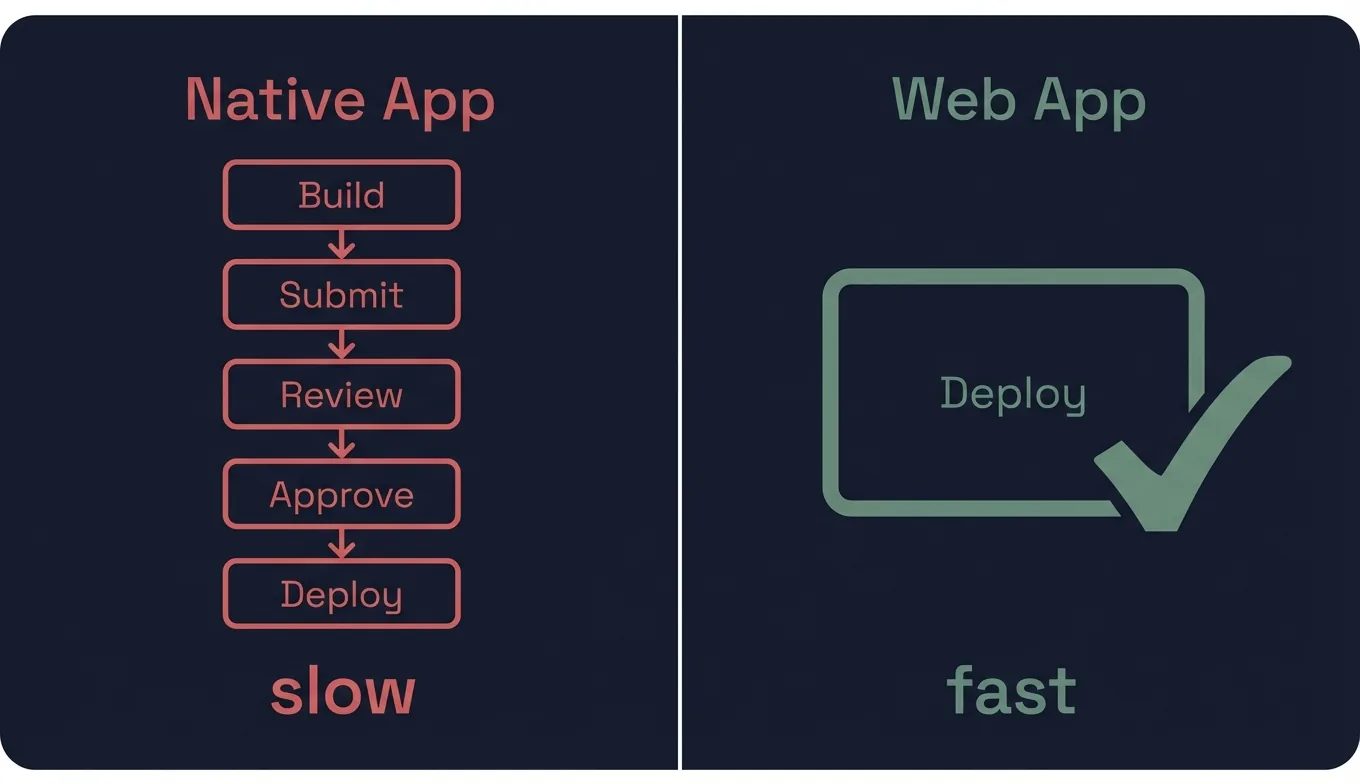
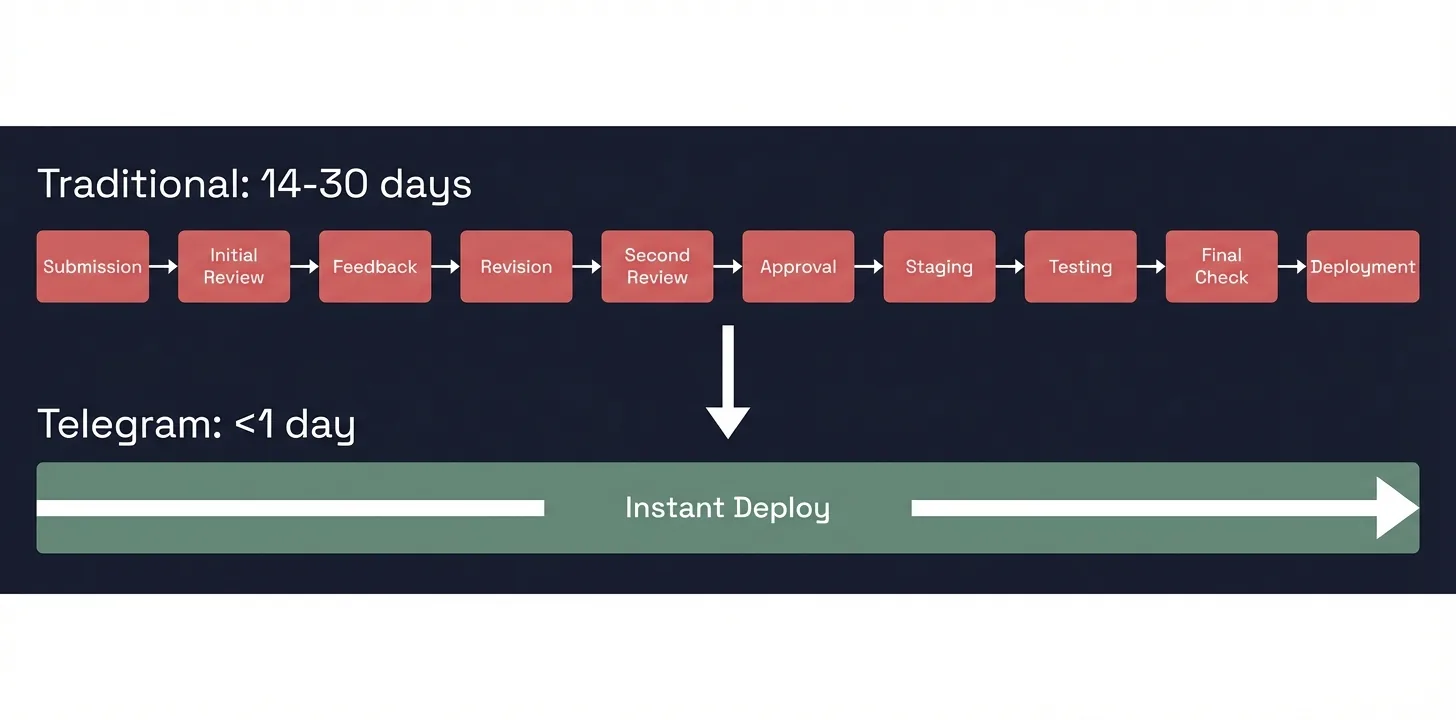
Compare this to traditional mobile game launch. App Store: Submit, wait for review, hope for featuring, pay for ads, compete with 5 million other games. Telegram: Post in channel, users click, game loads instantly, social sharing built-in.
4. No Platform Tax
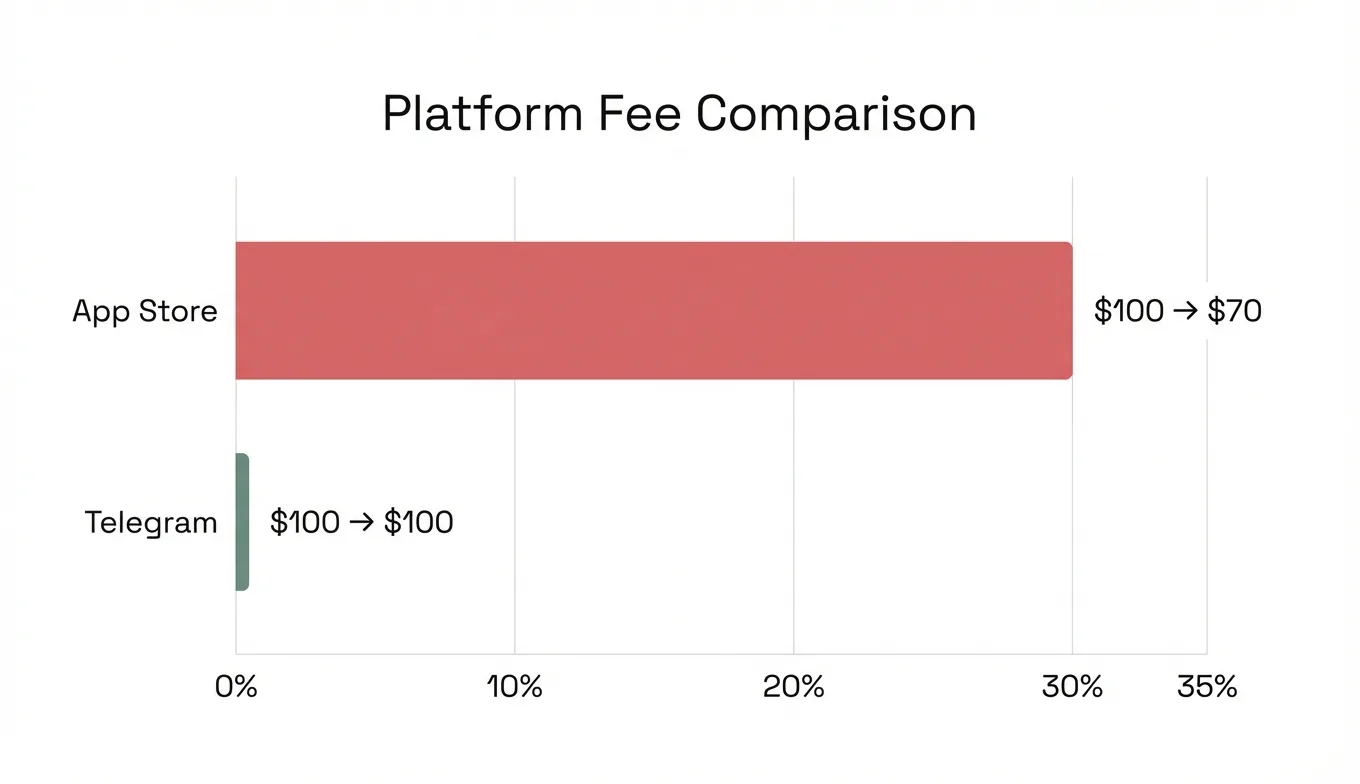
Apple and Google take 30%. Telegram takes 0% on crypto payments. For developers, this changes the entire economic model. A $100 IAP becomes $100 revenue, not $70 after platform fees.
5. Instant Updates
Web apps deploy instantly. Find a bug? Fix it and push. Want to run a time-limited event? Deploy it immediately. No waiting for app review, no version fragmentation where different users are running different builds.
The Business Model That Actually Works
Here’s where Telegram gaming gets interesting. Nobody building here is chasing mobile gaming 2.0, because the money arrives from a different direction entirely.
Traditional mobile gaming has whales spending thousands on IAPs, ads monetizing non-payers, and games optimized for retention and ARPDAU (average revenue per daily active user).
Telegram gaming works differently. Crypto payments enable micro-transactions (cents, not dollars). Social sharing drives viral loops without paid UA. Token launches create speculative value beyond game revenue. Community ownership aligns incentives differently.
Example: Hamster Kombat didn’t charge users $4.99 for premium currency. They built a tap-to-earn game where players accumulated tokens by engaging, then distributed $HMSTR tokens that have actual market value. The business model builds an engaged user base that tokens can monetize through market cap, rather than extracting money from players directly.
Is this sustainable? TBD. But it’s working right now in ways that traditional mobile monetization hasn’t for indie developers.
The TON Blockchain Integration
Let’s talk about how TON (The Open Network) fits into this, because it’s not just “blockchain for the sake of blockchain.”
Why TON specifically? It was originally designed by Telegram’s founders (though now independent). Fast finality at around 5 seconds for confirmation. Low fees at fractions of a cent per transaction. Native integration with Telegram’s infrastructure and a built-in wallet in the Telegram app.
What TON enables: Instant payments (send and receive crypto within Telegram’s interface). NFT integration where game assets can be blockchain-verified. Smart contracts where game logic can run onchain for provable fairness. Token launches where games can distribute governance or utility tokens.
The user experience is simple. Player opens game in Telegram. Connects TON wallet (built into Telegram). Plays game (feels like any other web game). Earns or buys items (blockchain transaction in background). Owns assets (can trade or sell outside game).
The key is that blockchain is infrastructure, not a feature. Players tap, earn, and optionally cash out without ever needing to understand proof-of-stake or gas fees.
The Developer Perspective
I’ve talked to a few teams building on Telegram, and here’s what they consistently mention.
What’s great: Zero platform fees on crypto payments. Built-in distribution through channels. Social features come free (sharing, groups, viral loops). Instant deployment with no app review process. Global reach without localization complexity.
What’s hard: Limited by web browser capabilities (no fancy 3D graphics). Crypto onboarding still creates friction for normies. TON ecosystem is smaller than Ethereum or Solana. Regulatory uncertainty around crypto gaming. Retention is brutal (casual games always are).
The economics are compelling for indie developers. Traditional mobile game has $50K-$200K development cost, $2-5 per install UA cost, 30% platform fees, and massive competition. Telegram game has $20K-$100K development cost (web tech is cheaper), $0 UA cost (channel distribution), 0% platform fees on crypto, and growing but still early competition.
Real Examples That Work
Hamster Kombat: Tap-to-earn idle game. 300M users. Massive token distribution. Shows that simple mechanics + social + crypto can scale.
Catizen: Pet simulation with Launchpool (staking for rewards). $30M revenue. Proves monetization works beyond just token speculation.
NotCoin: Viral tap game with token airdrop to 40M players. Demonstrated that Telegram’s distribution can rival traditional app stores.
Nobody is calling these technical masterpieces, but smart tokenomics landing in front of an audience that was already sitting there turns out to be enough. And they’re working.
The Catch (Because There’s Always a Catch)
Let’s be real about limitations:
-
Browser Constraints: Web games can’t match native game performance. Complex 3D graphics, precise physics, intensive computations don’t work well in a browser. Telegram gaming is best suited for casual, social, and turn-based games.
-
Crypto Complexity: Despite integration, crypto is still weird for normies. Explaining wallets, seed phrases, gas fees, and token swaps creates friction that traditional IAP doesn’t have.
-
Regulatory Gray Zone: Crypto gaming occupies uncertain regulatory territory. As games scale and tokens gain value, they risk classification as securities or gambling, depending on jurisdiction.
-
Retention is Brutal: Casual games have historically terrible retention. Day 1: 40%, Day 7: 10%, Day 30: 3%. Telegram games face the same challenge, plus the novelty factor that makes initial growth look better than sustainable engagement.
-
Token Dependency: Games that rely on token price appreciation for their economic model face an existential problem: what happens when the token crashes? Do players leave? Does the game survive?
What This Means for the Industry
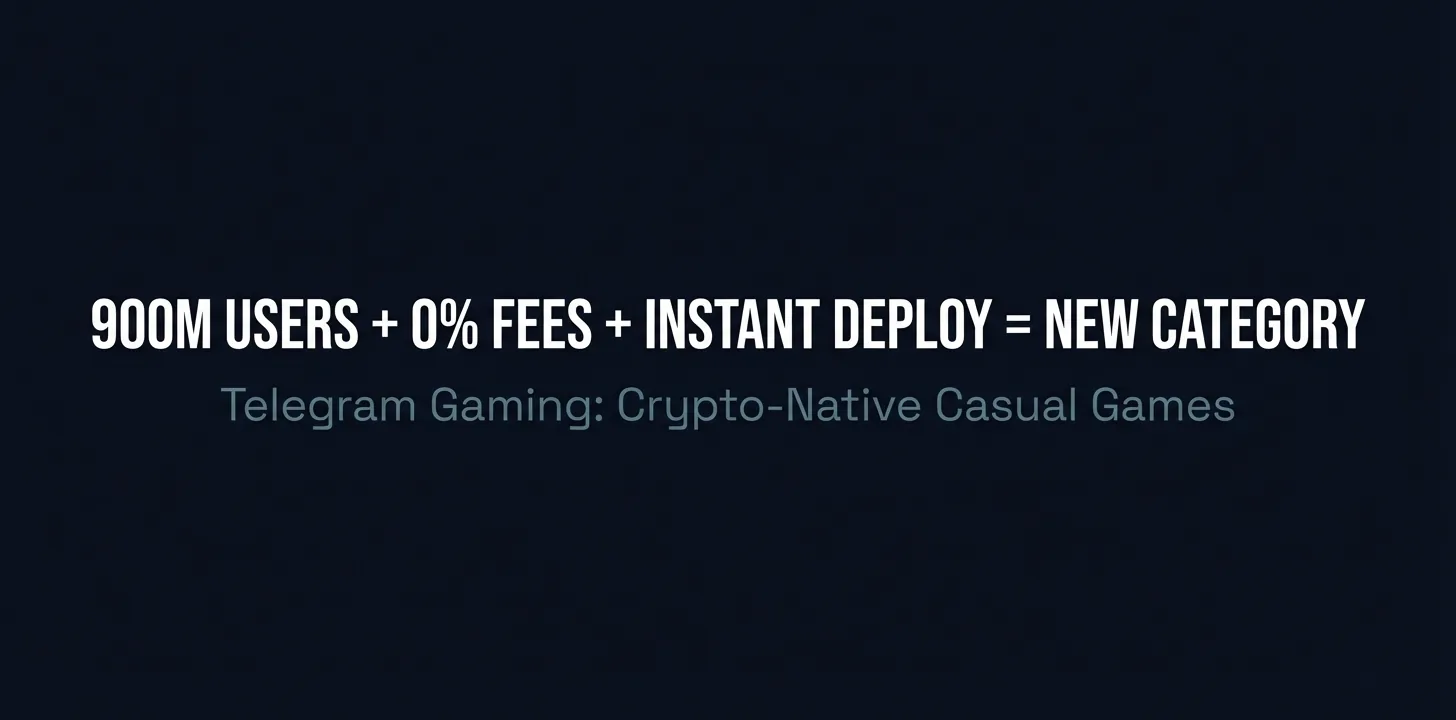
Telegram gaming is creating a new category alongside mobile gaming, not replacing it: crypto-native casual games with social distribution and token-based economics.
For developers: It’s an alternative distribution channel with lower barriers and different economics. If you’re making a casual social game, Telegram might be a better fit than app stores.
For players: It’s gaming where you actually own your stuff and can earn while playing without feeling like you’re being farmed for IAP.
For the industry: It’s proof that blockchain gaming can work if you hide the blockchain and focus on fun.
The Bottom Line
Telegram gaming works because it solves real problems. Distribution without user acquisition cost. Monetization without platform taxes. Social features without building infrastructure. Global reach without localization headaches.
It’s limited by web constraints, crypto complexity, and regulatory uncertainty. But for casual, social, and crypto-curious games, it’s infrastructure that traditional mobile gaming can’t match.
Is every Telegram game going to succeed? Hell no. Most will fail, just like most mobile games fail. But the ones that nail mechanics + social + tokenomics will have distribution advantages that app stores can’t replicate.
And that’s why developers are betting big on Telegram, even if mainstream gaming media is still calling it “another blockchain fad.”
This is part of the TL;DR series, breaking down complex tech in ways that actually make sense.